



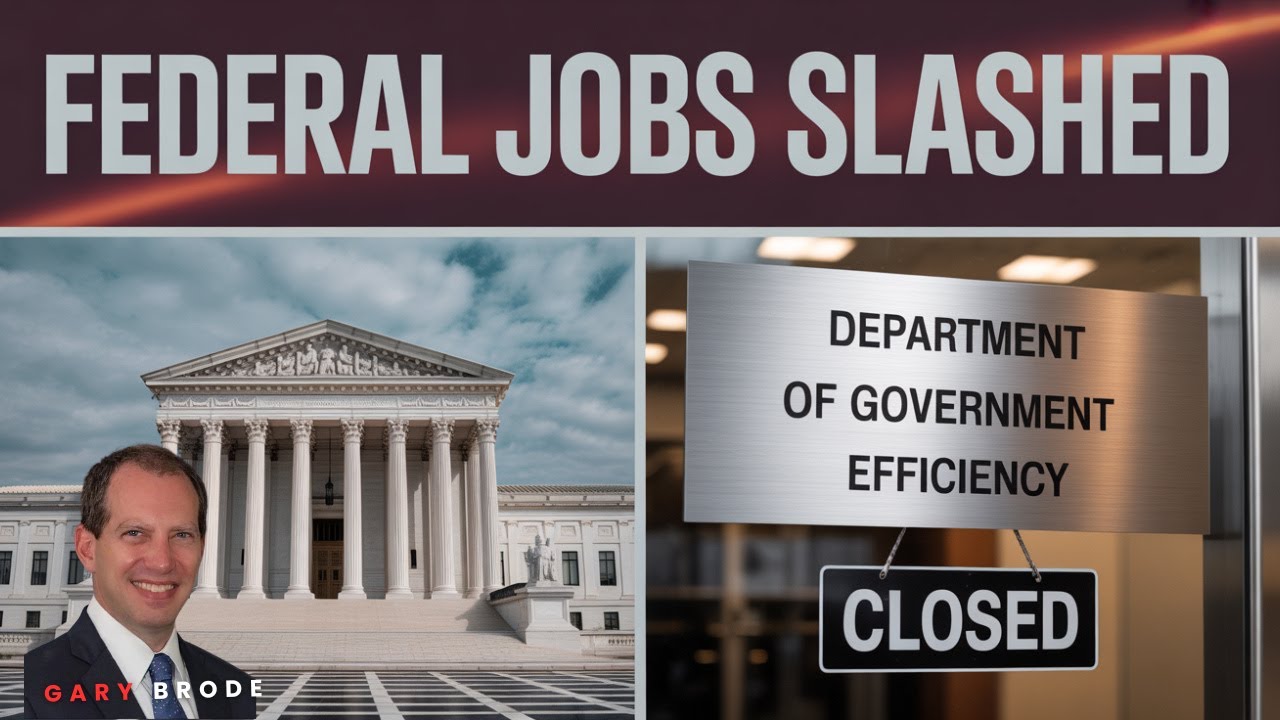
Some mornings start with coffee and a news alert that changes everything. Picture this: Three million federal jobs, gone in a flash following a Supreme Court ruling. That’s not the sort of notification you forget before breakfast. But what does a seismic shakeup like this actually mean for federal agencies, small businesses, and the average American? Before you tune out thinking it’s just another Beltway drama, let’s dive into the story behind the headlines—and why everyone from local grocers in Virginia to entrepreneurs in Seattle might soon feel the reverberations.
<!-- wp:heading {"level":3} -->
<h3 class="wp-block-heading" id="heading-1">Ruling from the Top: How the Supreme Court Greenlit Mass Federal Layoffs</h3>
<!-- /wp:heading -->
On July 8th, the Supreme Court delivered a decision that would reshape the federal workforce landscape. The ruling reversed lower court injunctions and backed the Trump administration’s executive order, effectively clearing the path for mass federal layoffs across multiple agencies. This Supreme Court ruling represents a fundamental shift in how the federal government can manage its workforce.
The decision carries unprecedented weight.
“The federal government workforce, just the civilian workforce alone, is larger than the median state.”
This comparison highlights the scope of what’s at stake—over 3 million civilian federal employees, a number that exceeds the population of 26 states combined.
The Legal Battle Behind the Decision
Before this ruling, lower courts had placed injunctions against the proposed layoffs. Labor unions, advocacy groups, and local governments challenged the executive order in court, arguing that the administration bypassed necessary congressional approval. The court injunction lifted by the Supreme Court’s decision removed these legal barriers, allowing agencies to proceed with immediate workforce reductions.
Research shows that the legal debate centers on executive authority versus congressional power in managing federal workforce and agency restructuring. Justice Ketanji Brown Jackson’s dissent emphasized this tension, highlighting the need for congressional consultation and warning against what she called an unprecedented dismantling of the federal government.
Immediate Impact on Federal Agencies
The ruling permits immediate reductions across federal agencies including the IRS, Agriculture, and Health and Human Services. These aren’t minor adjustments—they represent large-scale reductions in force (RIFs) that will impact tens of thousands of federal employees. The federal workforce reduction targets multiple departments simultaneously, creating a ripple effect throughout the government structure.
Studies indicate that the timing presents challenges for affected workers, particularly given the current hiring market conditions. Many employees have been placed on paid leave pending litigation outcomes, creating uncertainty about their future employment status.
Executive Authority vs. Congressional Oversight
The decision spotlights a fundamental clash between executive power and congressional oversight. The Trump administration executive order represents an assertion of executive branch authority to restructure the federal workforce without extensive congressional involvement. This approach challenges the traditional balance of power in government workforce management.
Previously, federal employment typically moved in one direction—growth. The Supreme Court’s backing of the executive order creates a new precedent for how the federal government can reduce its size and scope. This shift represents what supporters call a step toward better government efficiency and spending reform.
The Broader Constitutional Questions
The ruling raises significant questions about the limits of executive power. Research shows that the case highlights broader themes of government spending reform and regulatory state reduction. The decision essentially validates the executive branch’s ability to make sweeping workforce changes without extensive legislative consultation.
Critics argue that such massive workforce reductions require congressional input, given their potential impact on government capabilities and services. The dissenting justices emphasized concerns about bypassing the legislative branch in decisions that affect millions of workers and countless government functions.
Economic and Administrative Implications
The Supreme Court’s decision enables what the administration frames as a path to approximately $25 billion in annual savings. However, these savings come with trade-offs. Service delays are anticipated across affected agencies, and local economies dependent on federal employment face potential disruption.
The ruling’s immediate effect allows agencies to resume mass firings and workforce reductions that had been temporarily halted. This creates both opportunities for government streamlining and challenges for maintaining essential services. The decision transforms theoretical policy debates into concrete actions affecting millions of workers and the communities they serve.
The Supreme Court’s backing of the executive order represents more than a legal victory—it establishes a new framework for how the federal government can reshape itself. The decision removes legal obstacles that previously protected the federal workforce from rapid, large-scale reductions, fundamentally altering the relationship between executive authority and workforce management.
Winners, Losers, and the Ripple Effect: Who Feels It First?
The proposed federal agencies workforce cuts represent a massive economic shift that will create distinct winners and losers across different sectors and regions. With approximately three million civilian federal employees facing potential job reductions, the ripple effects will be felt far beyond government offices.
The Numbers Game: Who Benefits from Federal Layoffs
Proponents of the federal workforce reduction point to significant financial benefits. A ten percent staff reduction could generate approximately $25 billion in annual savings for government budgets. This represents substantial cost relief for taxpayers and could free up resources for other priorities. The federal workforce currently approaches three million civilian employees—larger than the population of twenty-six individual states—making it a substantial target for budget cuts.
Small business owners and entrepreneurs may find themselves among the unexpected winners. The regulatory state reduction that typically accompanies federal layoffs could create a more business-friendly environment. With fewer federal employees to enforce complex regulations, companies might experience reduced compliance burdens and faster approval processes for various business activities.
The Economic Impact on Federal Employment Centers
The economic impact layoffs will hit certain regions particularly hard. Areas with heavy federal employment, such as the DC metropolitan area and Northern Virginia, face the most severe consequences. These regions have built their economies around government employment, creating a vulnerable dependency on federal paychecks.
Research shows that regions heavily reliant on federal jobs face danger of consumer spending drops and economic shockwaves. When thousands of federal employees lose their jobs, local businesses—from restaurants to retail stores—will experience reduced customer traffic. Property values in these areas could decline as demand for housing decreases.
The government payroll impact extends beyond individual workers to entire communities. Local tax receipts will likely decrease as unemployed federal workers contribute less to state and local economies. This creates a cascading effect where reduced government revenue leads to potential cuts in local services and infrastructure projects.
Service Delivery Challenges and Delays
Government advocates warn that the proposed cuts could create significant service disruptions. IRS and other agency cuts threaten to impact tax collection efficiency, potentially creating longer wait times for taxpayers seeking assistance or refunds. Other federal agencies may experience similar service delays as they attempt to maintain operations with reduced staff.
The concern extends beyond inconvenience to real economic consequences. Slower processing times for business permits, immigration applications, and other federal services could create bottlenecks that impact economic growth. Government advocates argue that these productivity disruptions and service delays could offset some of the projected savings from workforce reductions.
The Regulatory State Reduction Debate
The controversy surrounding federal layoffs reflects deeper disagreements about government’s role in the economy. Critics of the current system argue that the regulatory state has become too large and intrusive.
“As far as I’m concerned, this sounds like the hunger games in reverse,”
reflects frustration with arguments that focus on protecting government employment rather than improving efficiency.
Supporters of workforce reductions point to successful examples from other countries. Argentina’s recent experience with bureaucracy reduction under President Javier Milei demonstrates that significant government cuts can coincide with improved economic conditions, including better inflation control and budget management.
The Immediate Winners and Losers
The most immediate losers are obvious: federal employees facing layoffs and the communities that depend on their spending. However, the winner category includes taxpayers who benefit from reduced government spending and businesses that operate with fewer regulatory constraints.
State and local governments present a mixed picture. While they may benefit from reduced federal oversight, they could also face increased pressure to provide services previously handled by federal agencies. Some may need to expand their own workforces to fill service gaps, potentially offsetting some federal savings.
The timing creates additional challenges for affected workers. Current hiring market conditions make it difficult for displaced federal employees to find comparable positions quickly. Many workers have been placed on paid leave pending litigation outcomes, creating uncertainty about their future employment status.
This workforce transformation represents one of the most significant government efficiency initiatives in recent memory, with consequences that will reshape both federal operations and local economies across the country.
Beyond the Headlines: Legal Battles, Global Comparisons, and an Uncertain Road Ahead
The Supreme Court’s decision to allow mass federal workforce reductions has unleashed a complex web of legal challenges that will define the future of government restructuring in America. While the immediate battle may be over, the war for the soul of the federal government is just beginning.
Labor unions lawsuits continue to pile up in federal courts across the nation. Federal employee unions aren’t backing down quietly. They’re mobilizing legal teams, filing appeals, and preparing for what many describe as the fight of their lives. These workforce reduction legal challenges extend far beyond simple employment disputes—they represent a fundamental clash over the role of government in American society.
Local governments dependent on federal employment are joining the fray. Cities like Washington D.C., where government workers form the economic backbone, face potential economic devastation. But supporters of the cuts argue these concerns miss the bigger picture. As one advocate noted, these complainers ignore the millions of Americans struggling under crushing regulatory requirements that stall job growth and prevent small businesses from taking hold.
Argentina’s Radical Experiment
International observers are watching closely, particularly as Argentina’s experience under Javier Milei provides a real-world case study for radical workforce reduction. The South American nation’s dramatic bureaucracy cuts achieved something remarkable—lower inflation and a balanced budget within a year. “Let’s learn from Argentina,” has become a rallying cry for government spending reform advocates.
Argentina’s reforms serve as both inspiration and cautionary tale. Milei’s administration slashed government employment ruthlessly, dismantling entire departments overnight. The results speak for themselves: inflation plummeted, government spending dropped dramatically, and economic growth resumed. But critics warn that what works in Argentina’s unique economic context may not translate directly to American soil.
The comparison isn’t lost on small business owners who see opportunity in decreased regulatory demands. For decades, complex regulatory requirements have favored gigantic businesses with dedicated compliance staffs while crushing entrepreneurs trying to start companies. The regulatory state’s reduction could unleash what supporters call the dual benefits of lower government costs and increased citizen productivity.
The Small Business Revolution
Small businesses and startups are watching these developments with keen interest. Regulatory uncertainty has long been their enemy, but the current upheaval creates both opportunity and risk. Reduced bureaucratic oversight means fewer forms to fill, fewer permits to obtain, and less government interference in daily operations.
However, service gaps could widen significantly. Government agencies that once provided essential services—from business registration to safety inspections—may lack the personnel to function effectively. This creates a complex environment where businesses gain freedom but lose support systems they’ve relied on for decades.
Research shows that ongoing legal opposition from labor and advocacy groups will likely extend these uncertainties for months, if not years. The legal battles ahead will determine whether these workforce reductions become permanent fixtures of American governance or temporary disruptions eventually reversed by future administrations.
An Uncertain Future
The path ahead remains murky. While Argentina’s success story provides hope for reform advocates, the American system’s complexity makes direct comparisons difficult. Constitutional challenges, federalism concerns, and established bureaucratic structures create obstacles that Argentina’s more centralized system didn’t face.
What’s clear is that the old assumption that government agencies would grow forever has been shattered. For the first time in decades, the small government movement has achieved a significant victory. It’s not huge, and it won’t bring government under control overnight, but it represents a meaningful start.
The ultimate outcome depends on several factors: court decisions, congressional responses, public opinion, and perhaps most importantly, whether the promised benefits actually materialize. If businesses thrive under reduced regulation and government savings translate into lower inflation, support for continued reforms may grow. If essential services collapse and economic disruption follows, the pendulum could swing back toward bigger government.
The federal workforce reduction represents more than job cuts—it’s a test of competing visions for America’s future. The legal battles, global comparisons, and economic uncertainties ahead will determine which vision prevails in this unprecedented experiment in government downsizing.
TL;DR: The Supreme Court’s go-ahead for sweeping federal workforce layoffs is more than a headline—it’s a turning point for government operations, economic stability, and the future scope of the American regulatory state.
A big shoutout to https://www.youtube.com/@DeepKnowledgeInvesting for their incredibly insightful content. Be sure to check it out here: https://youtu.be/2YLOZCPRnfE.